PRE-ORDER NOW! Here is the link: https://www.amazon.co.uk/Fear-Fearless-Every-Parents-Book-ebook/dp/B0CW1FTHJ2/
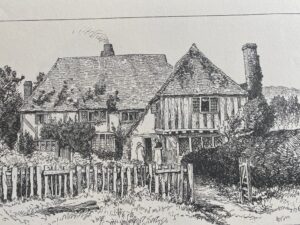
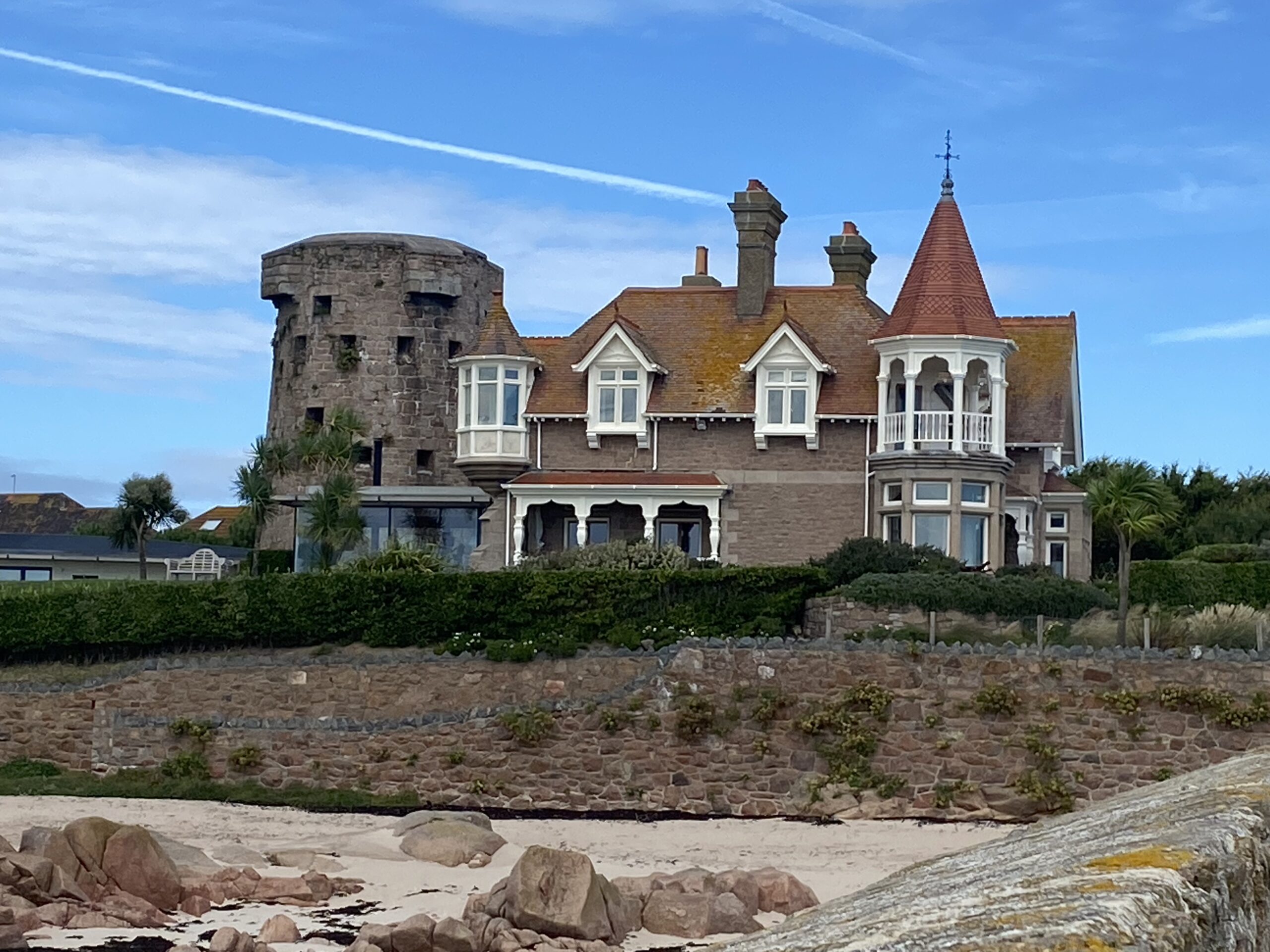
Haigh More House, in La Roque, Jersey, where the thalidomide children went on holiday
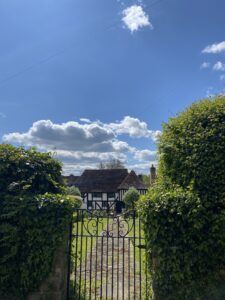
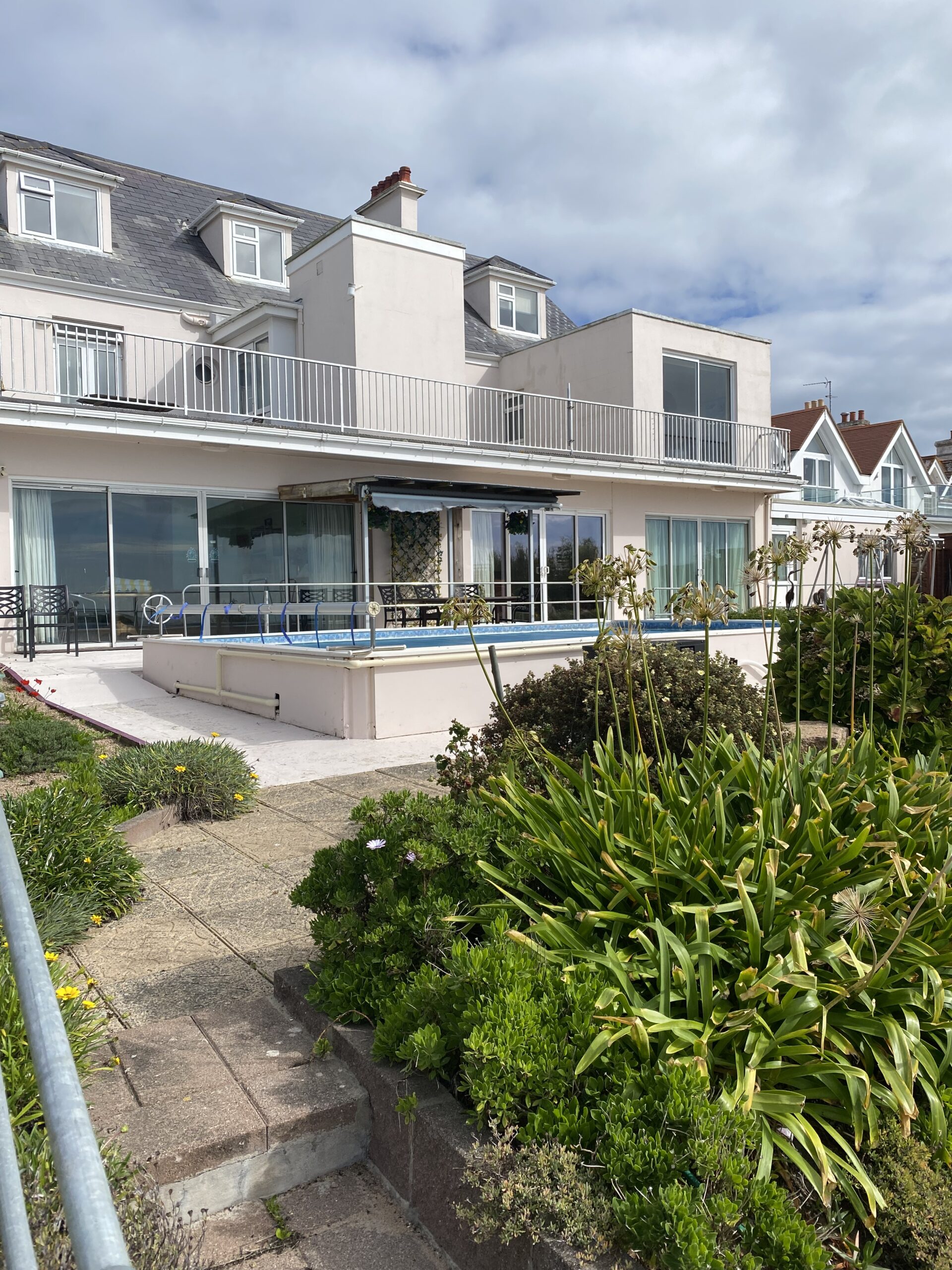
The inspiration for Bonaparte House. This house overlooks La Roque harbour and is very close to Haigh More House. It has a certain eerie presence especially at night. Note the tower on the left and turrets.
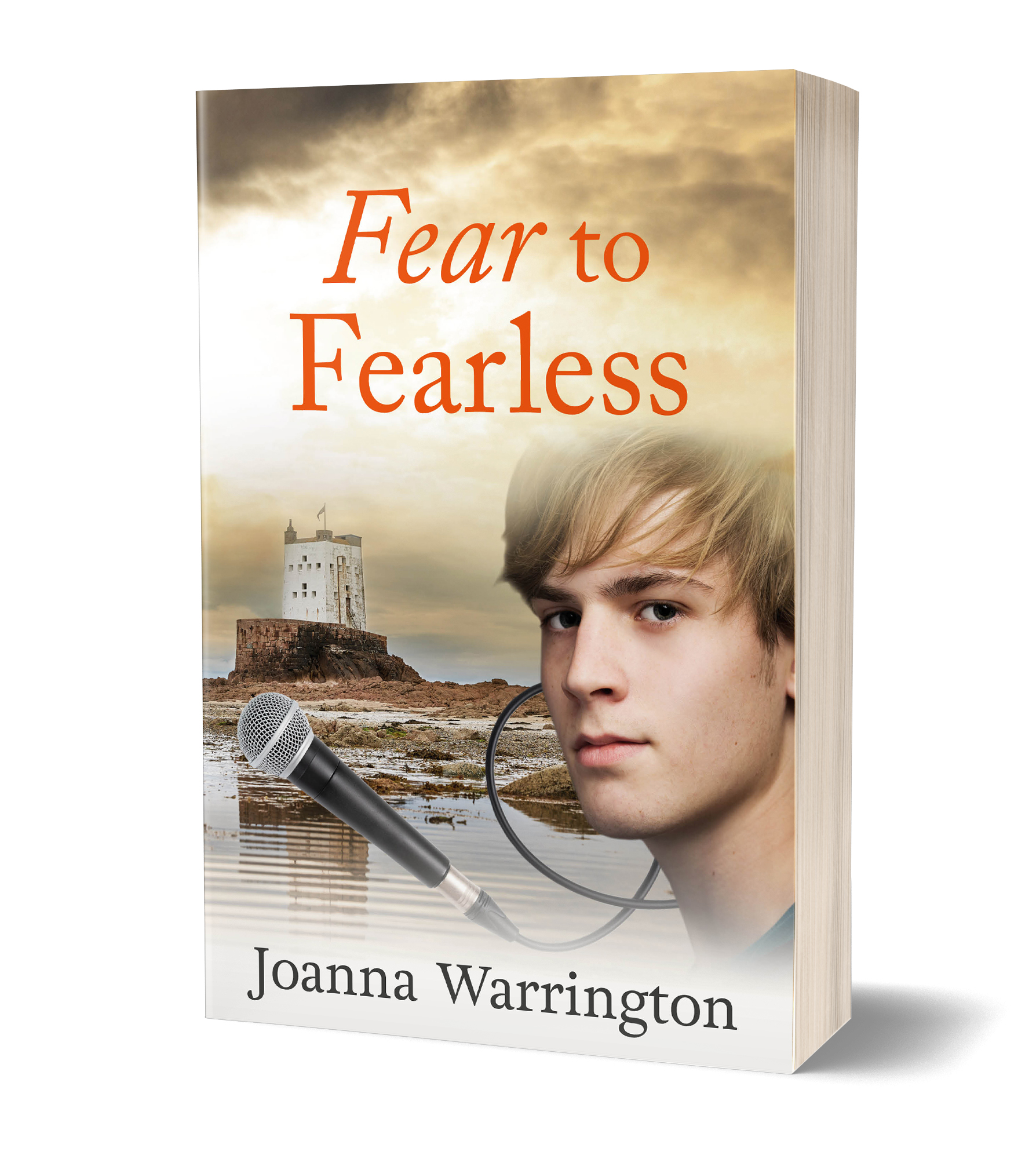
I’m really excited to announce that the next book in the series, Every Parent’s Fear will be released at the end of August and is available to pre-order NOW! The series has mapped Toby’s life from birth. Time has moved on and he is now growing into a young adult. This brings unique challenges some of which he must face on his own as he discovers his own pathway through life.
As at 2023 the thalidomide survivors are now in their 60s. It’s easy for tragedies to become buried in the past and forgotten as if they don’t matter or have been overcome, but as we know, thalidomide, just like the current blood scandal or post office office scandal should not be swept under the carpet. In writing their story, I hope to keep this wonderful group of people’s story in our minds.
This book follows the group’s adventures, including the highs and lows and there are many amusing as well as sad and poignant moments along the way. As a group they ventured on holiday to Bexhill in East Sussex and then to Jersey. These were fun times providing shelter from stigma and lifelong friendships and relationships were formed, some ending in marriage.
Join Toby on this exciting journey as he explores all of the issues the average 18 year old faces and more.
Comments Off on The Pearl of The Indian Ocean – a trip to Sri Lanka
The Pearl of the Indian Ocean is a true gem. Two wonderful weeks on this island, twenty odd miles from India has shown me how to enjoy the simplicity of life where expectations are far lower than here in the UK. The warm welcome given by everybody we met, from young to old, the sight of children running up to greet you with smiles on their faces and genuine joy and fascination made this a most memorable experience.
As you travel through this magical island there’s a tremendous contrast in scenery and climate. This brings its own complexities when trying to grow crops, from the rice paddy fields to the tea plantations. We learned about the various challenges of growing different crops and just how totally reliant they are on an agrarian economy. It was evident though that tourism is growing and providing them with a much-needed revenue stream. This is encouraging although one would hope that Sri Lanka doesn’t suffer from tourist overdevelopment.
The tour guide kept referring to the island’s current economic troubles which stem from the mismanagement of government and its reluctance over many years to tax its population. The country has been funded by foreign loans and they received a bailout from the IMF but foreign aid was withdrawn in the pandemic as other countries turned their attention to their own shores. Sri Lanka faces economic collapse if they don’t start taxing, but the population are now so used to low or zero taxation, it’s going to take a lot of convincing to change this situation. After all, who likes paying tax? The government fears riots and protests at a time when they are only just recovering from the problems of the past when civil war wrecked havoc across the country. It’s amazing the people are still so smiley and friendly.
In the modern era it is disconcerting to feel the people were being so respectful and subservient to us. This felt like a kick-back to the days of the British Empire and Raj. They are our equals not our servants and we don’t need to be referred to as sir and madam or bowed to. They are such a lovely, warm people who all go out of their way to make you feel welcome and help you in any way they can.
People often ask when you return from a trip what the highlight was and in this case I can honestly say I cannot single out any one experience or place. They were all tremendous in their own right and so unique that it would be unfair. From the glorious sandy beaches, the humid rainforest, the misty tea hills to the game reserve and the sweeping views from high rocks every turn was breathtaking and gave a new dimension for the eyes to feast on.
This island is definitely worth a visit. One would not be disappointed.
Comments Off on Writers, have you thought about weight gain?
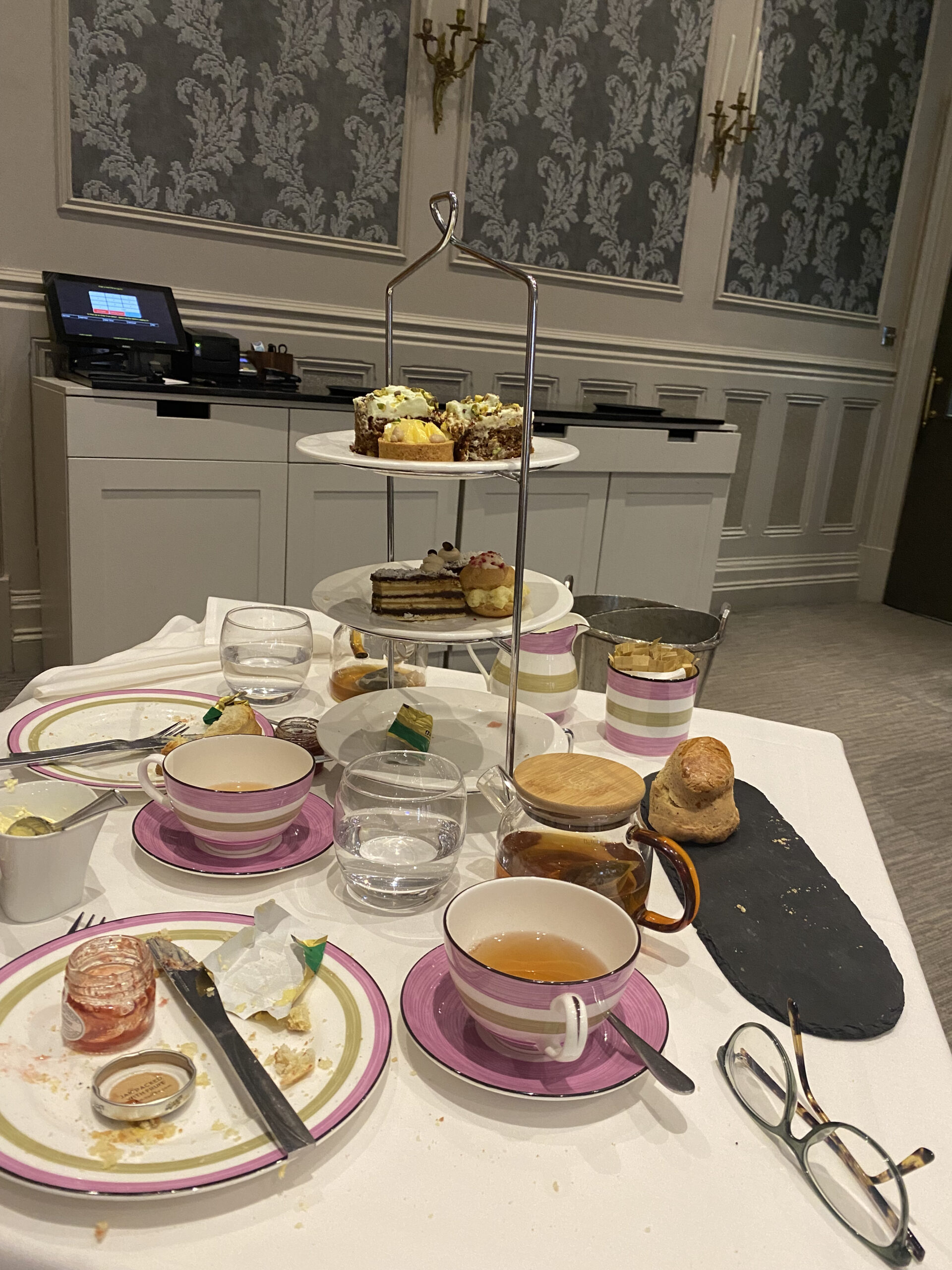
Birthday tea!
Before I started writing in 2012 I led an active life. A mother and a childminder I spent my days running round parks, playing hide and seek and pushing double buggies up steep hills. I was a trim size 10, I weighed 9 stone and could still fit into my wedding dress, just. After my mum died and with my children all at school, I took a new career path and became a funeral celebrant. Around this time I started writing family sagas and to date I’ve written 7 novels. My days began with a filter coffee, a check of emails and then down to some serious writing. The morning would disappear at my desk, between shuffling back and forth to the kettle and fridge. Breakfast consisted of toast or porridge but by ten I usually opened a bag of Mini Cheddars or grazed on a few biscuits, giving myself the excuse that it helped me to think and gave me ideas! By two in the afternoon, having written my target of 1000 words, I could no longer concentrate. And so my afternoons were spent wandering up to the town to get fresh air and exercise. I’d invariably plonk myself down in a cafe to read a book or catch up with a friend, enjoying hot chocolate with a delicious slice of cake. I didn’t notice the pounds slowly creep on. And when I reached a size 14 I told myself it was due to the menopause and an underactive thyroid, but the truth was my immobile lifestyle was the cause the weight gain.
In June I celebrated my birthday in style: a huge cream tea at a 5 star hotel. I waddled out of the hotel feeling like an indulgent, bloated pig. I’d also started dating a guy who was a skinny rake, the shape of a teenage boy and sitting next to him on the beach with our bare legs exposed made me feel fat. My legs were twice the size of his. Something inside me snapped. When I stepped on the scales I was nudging towards 11 stone, a whole stone heavier than him! The weight had to go. I had to change otherwise I’d continue to pile it on.
I’ve taken up swimming and try to swim for about 40 minutes each day. I also do a regular power walk round the woods and I’m on a strict diet: a chia seed, almond milk and banana smoothie for breakfast, or porridge, Ryvita and reduced fat cheese for lunch with salad and a salad in the evening with a form of protein such as tofu, boiled egg, chicken or salmon. I feel so much better, more energised and the terrible stomach bloating I was getting has gone. Since my birthday in June, 10 weeks ago, I’ve lost 13 pounds and my size 14 trousers are hanging off me!
So fellow writers out there, be careful of those creeping pounds and be sure to have a balanced life of work as well as regular exercise!
If you would like to be added to my monthly newsletter and receive updates on my new releases please sign up here: http://eepurl.com/hc0GGz or directly via my website.
Comments Off on Thank you Jim for suggesting Anglesey
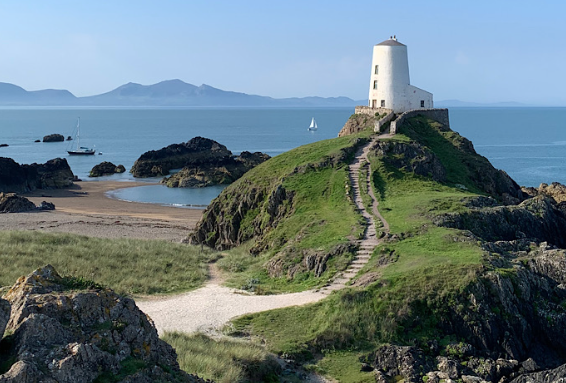
Iconic lighthouse on Anglesey – Ynys LLanddwyn
I’ve never met you, Jim, but thank you for suggesting a holiday to the Isle of Anglesey. We did have cheap flights booked with Easyjet to go to Spain to see my sister, but travel abroad this year is way too complicated thanks to Boris and his clan of not so merry men. And so your suggestion, Jim, made over a mug of builder’s tea and a Custard Cream was a welcome one. It’s not a part of the UK I’ve ever visited before but the more Google images I look at, the more excited I am to go there. Rolling hills, crystal waters, a rugged coastline, stunning sandy beaches and a spiritual history; it really does look beautiful. And I love lighthouses. I can’t wait to take my Canon and snap some pretty pictures.
There’s one slight problem, Jim. I’ve booked and paid for a week at The Bull Hotel, Llangefni and I’m now having to go alone. I’ve been stood up. Erased from his life. I don’t want you to feel sorry for me. It’s not your fault. My love life is always a shambles. I’ve never been lucky in love. You didn’t know he’d play hot and cold and disappear, vanish off the face of What’sApp and move on to a younger filly. Ghosting it’s called. You only work with him. Share a Custard Cream at break time. I had no inkling either although there were red flags flapping furiously in the wind, like on my birthday when he didn’t give me a card and cancelled my birthday meal. I’m pretty sure he was two-timing me. Call it womanly intuition. I’ll be fine. In any case, I need to get used to travelling alone because when the pandemic is over, I intend to explore the world. Anglesey is a test to see how I cope.
I’ve booked several activities which we might not have done together. I’m packing lots in to the week. I shall have a good time alone. It will give me headspace and might even inspire my next novel or a house move. So thank you, Jim for suggesting Anglesey and here is my itinerary for the week:
Friday 10th
Llangefni, The Bull Hotel, LL77 7LR. Jim you suggested this pub. Popular with couples the website says. As a single woman I can’t eat alone at the bar in the evening. I might have to buy salads from Asda and eat them in my room.
Saturday 11th
9.30 cycle ride, Beaumaris to Penmon lighthouse Tel Eli 07940966879
the meeting location was outside the David Hughes Community Centre now the Beaumaris Leisure Centre, which is just further up a nearby service road which takes you to the Centre car park, and at the end of the road, the community centre- you can park there all day with your bike hire.
Sunday 12th
Wales Coast path – explore lighthouse and beaches
Monday 13th
Conwy : sightseeing cruises, smallest house in Britain, Conwy castle
A trail with tales with a lady of Wales
5pm to 6.30pm. Rose Hill Street, Conwy, LL32 8LD
We walk around the streets, alleyways and quayside of the medieval walled town of Conwy taking in the outside of all the significant sites and sights from the castle to the coast
Meet outside the tourist information centre where I’ll supply the receivers that you use to hear the commentary I’ll be relaying through my microphone. That means you can socially distance and linger to take a picture and not miss a word. This is a history tour made interesting with plenty of stories for young and old alike led by a lady in traditional Welsh costume – tall black hat and all. We see the outside of all the main attractions in Conwy – the castle, the church, the walls, Plas Mawr, the gateways and of course the smallest house and quayside. All the time you’ll hear about the doings of past and present inhabitants – real and ghostly alike. Your guide is a resident of Conwy so you’ll get a real insight into what it is like living in the town today as well as in the past. There’ll be plenty of time for picture taking and question answering. The tour takes about one and a half hours and is suitable for pushchairs and strollers though there are some rough paths.
Tuesday 14th
Portmeiron, castles and Snowdonia Tour. 8.30 till 6pm
Meet: 17 North Parade, Conwy Principal Area, (Llandudno) Wales LL30 2LP (Take A55)
Great Orme Road. – Conwy Castle & viilage. Unesco world heritage site Britains smallest house. Caernarfon Castle – unesco world heritage site Portmeirion- italian styles village and gardens Snowdonia national park and snowdon viewpoint. The ugly house. – A wonderful endearing old construction Swallow falls waterfall. – Beautiful cascading falls Ty hwnt y bont – picturesque setting of the 15th-century grade II listed building.
Wednesday 15th September
Meditation walk in the Carneddau, 10 till 1pm
Sychnant Pass Rd Conwy LL32 8BJ
walking in the foothills of the Carneddau, a very special range of hills & mountains, from the North Wales Coast at Conwy right into the heart of Snowdonia. Away from the crowds of Snowdon, I will guide you amongst the lesser-tramped slopes at the northern gateway to this wonderful ridge, with breathtaking panoramic views of the North Coast, the Conwy Valley & Denbigh Moors and the Carneddau ridge itself.
Thursday
Walk, walk, walk and visit cafes for Welsh cake and tea.
Tired of visiting the same Sussex resorts, I headed to Whitstable on the north Kent coast to celebrate my birthday. Just before leaving, a conspiracy theorist told me, ‘ that’ll be nice and crowded.’ ‘Hardly, I replied, you seen the weather today?’ ‘People are gearing up for permanent lockdown, it will be busy,’ he warned. Whether it was busy for those reasons, I doubt it, or just because it’s summer and people can’t go abroad, he turned out to be right. The traffic was heavy and the parking, once we’d found a space , was expensive.
For several years now house prices along this stretch of coast have risen exponentially, mainly because Londoners have discovered this hidden gem, flocking to this quirky, historic town with its working Cornish-style harbour to buy second homes. It’s a short zip back to London for a Monday morning start back at work and so you can see why they’ve priced the locals out.
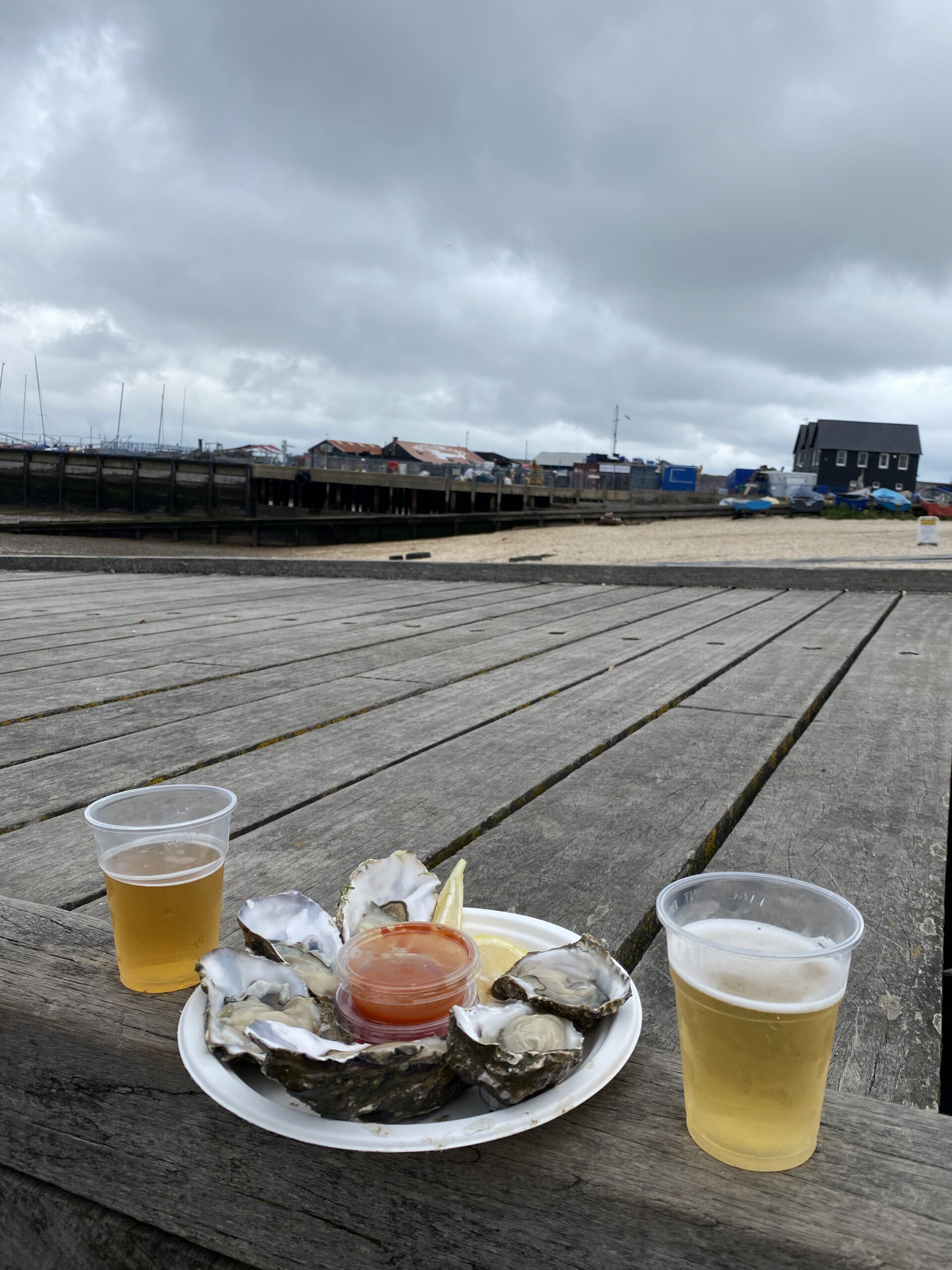
I’m a cafe girl, always have been and like to read and write while I sip strong black coffee, but weaving our way through the back streets of Whitstable, I was excited to see so many old traditional pubs, the type I remember from years ago. Especially when I lived in south London . Real pubs cluttered with old stuff on shelves, wood everywhere, groups of friends huddled around tables drinking rather than gastro pubs converted purely for dining. Old frontages with swaying signs, dark and welcoming insides with a chink of copper and warm low lighting and an array of colourful bottles behind the bar, a good selection of beers. Aside from the pleasure of visiting a proper pub again and amid fears that 1:5 are going under each week, we had a very good reason to dive into a pub; we’d bravely eaten a plate of oysters on the seafront and needed to swill them down with a pint or two of Kent’s finest. Whitstable is famous for its oysters, collected from the beds since Roman times, now cultivated. For those who’ve never eaten oysters you do have to be brave to sample these little beauties. The beaches of Whitstable are littered with oysters shells , huge swathes of white across the pebbles , washed up by the actions of the waves. Not far out to sea there are oyster trestles visible at low tide.
So what do they taste like? Slippery and slimy like a body part! So slippery you might miss your mouth and let it spill down your top. They taste like the sea, every seaside memory hits you at once as it slithers down your throat coming to settle at the pit of your stomach . You shudder and swallow . Then you’re aware of it nestling there for the next hour or two until you’ve forgotten the experience in a cloud of beer and your worry of becoming ill and ruining the weekend.
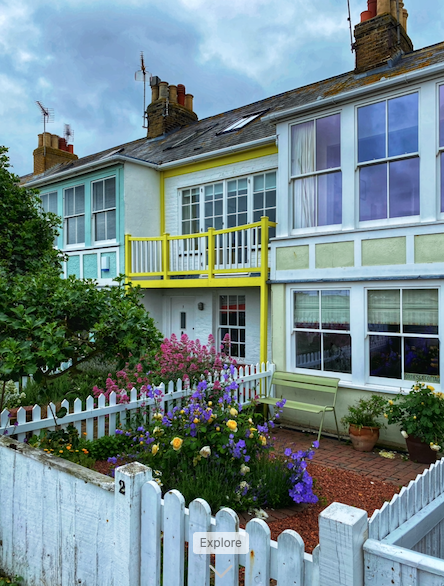
Whitstable has an array of diverse eateries for every palette and every budget from seafood to pizza , cream teas , to good old Eastend pie, mash and liquor. The best restaurants overlook the working harbour. As soon as you arrive you need to head to the seafront, stroll along and look at the colourful Cape Cod style weathered boarded houses with neat gardens a riot of colour, roses, lavender and other flowers. It was June and the beach was also teeming with plant life including red and yellow poppies.
If you visit Whitstable, don’t forget to drive out to nearby Tankerton and Herne Bay. They are equally lovely. From Herne Bay you can walk or cycle along a beach path for several miles taking in the wonderful views, beside beautiful green slopes– a natural habitat for plant life, insects and birds. Truly glorious!
Tom Moore was born on 30th April 1920. The radical Liberal, David Lloyd George who introduced National Insurance was prime minister––the only prime minister to have spoken Welsh as his first language. Woodrow Wilson was the president of America. The most viewed film that year was The Tollgate. In those days films were silent.
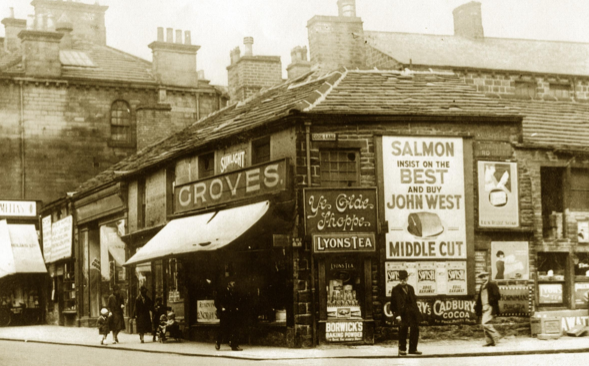
Tom was born in Keighley, Yorkshire, a mill and market town and the town has a rich railway heritage.
We mourn for the loss of Tom’s generation because they gave so much to us through their wisdom and endurance. Tom had led a very rich and full life. His death, while unpleasant, was as natural as the picking of a ripe apple or the falling of a brightly coloured leaf in autumn. The harvest has been gathered in, his journey ended, his story told. His life’s tasks have finished. But who would have imagined that at 99 as he embarked on a few steps to raise a small amount for the NHS, he had so much more to achieve?
While there is sadness in him leaving us, there is a sense of worth and achievement, so much so, that his death becomes a celebration.
In the 100 years that Tom Moore has lived, the world has moved at a fast pace from a time of limited opportunities to promised endless reinvention. We can fly across the world and to other planets, crack our own genetic code. Tom saw so much change over his life and wanted to be a part of change even towards the end.
Captain Tom Moore served in Burma during the Second World War. This was an Allied campaign to defeat the Japanese. When the Japanese entered the war in December 1941 her main aims were to acquire raw materials particularly oil, rubber and tin and to create space for their growing population on the over-crowded islands. Hong Kong and Indo-China fell to them without difficulty, but their greatest gains were in the Malay Peninsula. They invaded Burma for two reasons. They wanted to cut the supply route––over-land access to China from Burma, via the important Burma Road. Also, possession of Burma would put them at the gate of India, where they hoped there would be an insurrection and collapse of British power in India. The Japanese entered Burma from Thailand and quickly took Rangoon, cutting off the Burma Road.
Tom Moore’s strength of character, mind and body undoubtably came from his time in Burma. Fighting the Japanese who were a brutal enemy in an extreme terrain, in monsoon weather and intense heat with the threat of disease and appalling conditions. His paces last year in which he raised a staggering £32 million were nothing by comparison but a massive achievement given his age.
Tom Moore has become a national treasure, always raises a smile and he will remain a symbol of good during this pandemic.
Comments Off on Why do authors write about blood, guts & gore? Part 1.
When I’m not writing or tweeting I’m out drinking coffee at my local garden centre with writer friends, sharing ideas, helping and supporting each other. It always intrigues me where other authors get their ideas from and what has inspired them – particularly if they write about blood, guts and gore. There’s no doubt that sensation sells. Crime dominates the bestseller lists––the gorier the better for lots of readers. But why do people write about sickening stuff?
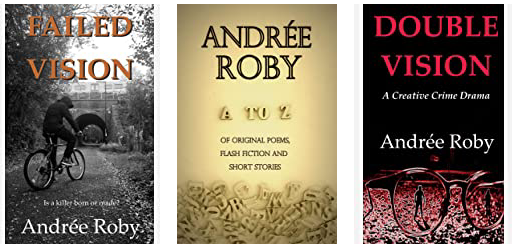
I asked my friend Regine Demuynck, a newly-published crime writer, with three books published on Amazon (author name Andree Roby) what inspires her to write about child murders.
Regine said, “It interested me to watch tv documentaries on Britain’s deadliest kids. I kept asking myself the question, what makes a killer, especially a child killer? What made them flip? They presumably knew right from wrong. In my book, Failed Vision https://www.amazon.co.uk/FAILED-VISION-killer-born-made-ebook/dp/B08LT1D7XT/ I put across the premise that we are all born with the killer gene and in some of us it’s activated. There have been some killers who have had everything in life and still been driven to kill. After writing my first book, Double Vision https://www.amazon.co.uk/DOUBLE-VISION-Creative-Crime-Drama-ebook/dp/B07ND2C8BV/I started looking at certain cases. I modelled my protagonist on Aaron Campbell, killer of a 4 year old girl. The character is based on him and what happened to him. He watched videos his mother brought him and his cannabis abuse was portrayed in the book. Aaron’s mother thought she could prove his innocence. He tortured and killed a young girl in a disused hotel.
‘Do you not get emotional or feel disgusted?’ I asked Regine.
“Domestic rape does, but it doesn’t make me feel particularly emotional. To me it’s just writing, just words on a page. I detach myself. I get emotional when I see dogs mistreated. That breaks my heart. I feel sad, it’s not right and brings me to tears. With dogs they trust you implicitly they’ve not done anything wrong. The way animals are mistreated is an outrage. I don’t deny it though, there have been times when I’ve become depressed writing about murder and violence, particularly when I think about the detail.
I was interested in Trevor McDonald’s interview on death row and how an action carried out on impulse can completely change the course of one’s life and how that person is defined. An action by a 12-year-old defines who they are for the rest of their life. A chilling thought. And to spend the rest of their life in prison for that one action.
Women rarely kill those they don’t know. The majority of women in jail have killed a close one. I’m interested in triggers and patterns of behaviour. Given a situation, could I kill if I was abused? Women get to the point where they explode if provoked, but murder by women is very rarely premeditated .
I felt compassion for my killer while I was writing. He’s a product of poor parenting. There is a vulnerable side to Sam. I hope it shows to the reader and how this can happen. Expose a child to horror and it has a psychological effect on them and if your victim is a stranger you have no connection. In Failed Vision there are little glimpses of his vulnerability. He isn’t valued. Feels rejected. It was important to show the complexity of his psyche. That’s part of my job as a writer.
My next book will be Deadly Vision about a woman killer.”
When this pandemic began early in the year, friends saids to me, “You’ll do very well out of this crisis, there will be lots of funerals to conduct.” Did they imagine everybody involved in the funeral industry rubbing their hands in glee in anticipation of lots of work? Of course we didn’t think that for one minute. Like everybody, we dreaded what lay ahead, we didn’t want to see families suffer, losing loved ones before their time. It’s been horrible seeing people distressed and shocked because in the main, these deaths were so unexpected. An elderly person who’s had a fall going into hospital only to pick up Covid and die. A bus driver in his sixties, overweight with diabetes who could have lived another ten years at least.
But surprisingly, like many celebrants, I haven’t been very busy during this difficult time. Deaths haven’t actually been much higher than they normally are but also many more celebrants and humanists have joined the profession as a result of the crisis. One funeral director told me today, at the start of the lockdown people were worried about losing their jobs and decided to re-think, re-skill, re-train. Some looked to the funeral industry as a great bet – a job that was likely to be incredibly lucrative. Consequently the celebrant market has been flooded yet again with new recruits.
Funerals are strange occasions at the moment. I arrived at the crematorium today and had to sit in the car until just before the start of the service because the waiting rooms are currently closed. I would normally mingle with other ministers and funeral directors; it’s a great opportunity to connect and catch up. As I waited I watched families get out of their cars, different households hugging, kissing and clinging to each other. As they approached the chapel they all pulled their masks out, they knew what was expected of them, just as they would if they were approaching a shop–– it’s been drummed into us for weeks now. Several months ago pallbearers and funeral directors didn’t wear masks, but they do now. I wished I’d worn a black one, it would have looked more dignified and appropriate or maybe I would have looked like a bank robber. Instead I put my flowery mask on and my glasses misted over making it hard to engage with the mourners as we all waited outside the chapel.
Inside the chapel there were 30 chairs all separated from each other which looked very odd and not right at all given the nature of the occasion. Families need to sit next to one another, they need to comfort each other, pass tissues up and down the row and reach out if somebody is struggling. As I stood at the lectern looking out across the small sea of masked faces it was hard to read their emotions and connect with each person because the masks acted as a barrier, but I did the best I could.
At the end of the service the curtains closed around the coffin. This is also a new practice to discourage mourners from gathering at the coffin after the service, hugging each other and touching the coffin.
Are these measures really stopping the transmission of the virus or simply adding to the distress of families who surely have been through enough already?
Comments Off on Don’t blame me: My new book release coming soon!
‘Don’t Blame Me’ is my latest – soon to be released – novel. It’s a family saga about a woman returning to her childhood home to help her dad who is dying. She hasn’t been back in twenty-five years and is scared to confront the tragedies of her past. But the one person she does not want to see is also staying in the village.
I started writing the novel in February, long before the coronavirus had officially escaped out of China and barely talked about in social circles here in England. Originally I planned to write a family saga about a slaughterer and his daughter, having listened to an interesting piece on Radio 4 about the devastating impact on peoples’ mental health from working in abattoirs.
When lockdown arrived I was up to chapter 5 and about to visit an abattoir in Kent to chat to the owner as part of my research. With world events moving fast and the story of the coronavirus gathering pace, like everyone else I found myself gripped to the news and started to keep a diary of events and my thoughts on what was happening. The 23rd March arrived. Several weeks of solitary confinement loomed ahead presenting a fantastic opportunity to bash ahead with my new novel. But by this time I had lost interest in the abattoir theme. I was so caught up in the virus story and wondering how government measures were going to affect individuals, society and the economy. The situation was going to affect each of us in very diverse ways. Nothing like this had ever happened before in my lifetime. I carried on with the initial theme of my novel – a woman returning to the Kent village where she grew up to confront her painful past, but dropped the abattoir theme and decided to set the novel in the lockdown so that this could form the backdrop.
All the wonderful scenes I saw during lockdown: children playing hopscotch in the road, no planes in the skies, a man walking down the street in a plastic greenhouse and another in a Spiderman mask for protection, feature in the novel.
The novel is set in the Kent village where I grew up but I’ve given it a fictitious name. The house in the novel was inspired by my childhood home. (see below). I’ve lived in so many houses since childhood but in my head, Heatherly, (the house in the novel) is my home and where my heart belongs. The real Heatherly was stunningly beautiful. At the front of the house there was a large allotment when we moved in, in the 1980s, and my parents worked hard to transform it into a rose garden. To the rear of the house my parents had a lake created with an island and a bridge. The house was built in 1270 and has appeared in several books on architecture and the history of homes. The village has barely changed since I grew up there in the 1970s. The River Medway runs through the fields around the village, dotted with pillboxes from the Second World War. The novel primarily is a story about a woman confronting some horrific events in her past but woven through are my nostalgic images of my own childhood village.
We couldn’t go anywhere during lockdown apart from the supermarket. But I needed to make notes of all the flowers and plants along the river so that my descriptions were authentic and accurate. As soon as we were allowed to, I drove to the village to walk through the fields making notes and sketches of the flowers and plants I saw in order to weave through the novel. I wanted the reader to live and breath the surroundings.
I don’t want to give too much away but I hope this has given you some idea of the setting for my new novel!
The house where I grew up, my inspiration for the novel’s setting
My childhood home, the inspiration for my latest novel, Don’t Blame Me.’
Comments Off on My experience travelling to Spain during the Coronavirus pandemic
Strict procedures in place for travellers at Heathrow
Spanish beaches were not busy
Travelling to other countries has always been stressful. For years we’ve had the on-going threat of terrorism and sometimes there are weather concerns and natural disasters. But 2020 will go down in history as probably the worst year for aviation and tourism. Lots of us don’t want to travel at the moment and governments across the world are adding to our fears and making it difficult by imposing restrictions at the drop of a hat. This is the reality of we’re now living with. It’s been one long catalogue of inconsistency, u-turns and spurious rules they make up as they go along.
Yesterday I flew back from Malaga into London Gatwick. Only half the seats were filled and from the air I could see that the car parks were empty too. There were very few people in the terminal apart from reporters waiting to interview travellers. It felt eery, as if it was 2am not 2pm. The cafes and duty-free were closed. A gleeful reporter, keen to hear my views on the 14-day quarantine Boris imposed on all travellers entering the UK from Spain thrust a mobile in my face ready to record me. “I feel very cross,” I told him. “I can’t go back to work and I have lodgers at home. Does that mean they must quarantine too? And why a blanket quarantine? Most of Spain is now virus-free. And I haven’t been to the affected area – the north-east of Spain. I stayed with my sister who lives in the mountains and we hardly went out because masks are compulsory everywhere, even on the beach! Try wearing a mask in the heat.”
I booked flights to Malaga when the restrictions on travel to Spain were lifted several weeks ago. At that point the number of coronavirus cases in Spain was very low. The Spanish government was looking forward to welcoming the British this summer. The only problem in travelling, and this applies to anywhere in the world, is that you cannot get insurance that covers any Coronavirus related issue.
I wanted to write this blog to tell anyone thinking of getting a flight that as long as you take the same precautions you would at home you should be fine. I flew out of Heathrow and the procedures in place were excellent. The airport are using new equipment that automatically takes your temperature as you enter the airport. You must wear a mask in the airport and throughout your flight. Social distancing was practised too. There were plenty of hand-sanitising stations and the plane had been deep-cleaned. We were handed a bag containing water and snacks as we boarded by a gloved hostess wearing a mask because drinks and snacks are not now available on flights during this time, but obviously you can bring your own food on board. I felt very safe throughout this experience. We all need to take personal responsibility. That involves regular hand-washing, wearing masks and distancing from others. It’s simple!
I think the reason why the number of virus cases is climbing in some regions of Spain is because of busy nightclubs and bars where people don’t distance and don’t wear masks and also large family gatherings. Governments will never be able to control what people do in their own homes. I predict Italy will have the next wave because like Spain they are a family-orientated country; lots of people live in extended family households.
I found Spain to be a very safe country to visit. The police make-up their income by fining people heavily for not wearing masks and breaking lockdown rules. The police trawl round looking for those not wearing masks. There are inspectors on the beach. They even carry card machines for on the spot fines! Spain are much tougher than Britain when it comes to rules. This latest move saddens me to think of all the Spanish businesses that will now suffer as a result. I’m glad I went, I’m glad I wasn’t frightened to travel and I’m glad I supported their travel industry. I would now support Britain’s economy if I was allowed to go out. But quarantine I must!

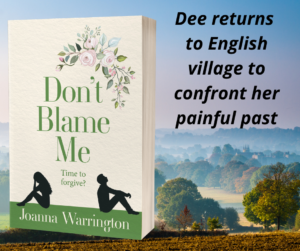 ‘Don’t Blame Me’ is my latest – soon to be released – novel. It’s a family saga about a woman returning to her childhood home to help her dad who is dying. She hasn’t been back in twenty-five years and is scared to confront the tragedies of her past. But the one person she does not want to see is also staying in the village.